
The Leader as Teacher: Three Coaches. One Weekend. A Masterclass in Character.
This past weekend, women’s college basketball provided a masterclass in the two paths every leader eventually faces. One leads to a lasting legacy, the other to a meltdown on camera that the whole country saw coming.
Let me set the stage.
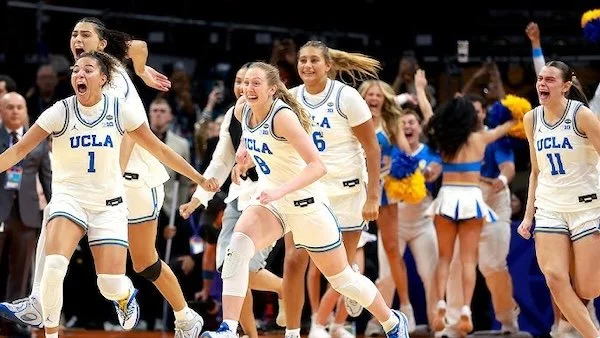
Cori Close, head coach of the UCLA Women's Basketball team, just secured a National Championship, a commanding 79-51 victory that was both dominant and decisive. She is, by any standard, a product of one of the greatest coaching lineages in sports history, a direct protégé of UCLA legend John Wooden. Wooden won more national championships than any coach in any sport, ever, ten titles in twelve years. And here's the thing that still stops me cold every time I think about it: Wooden never focused on winning. He focused on teaching the path to success.
Wooden identified himself as a teacher, not a brand or icon. His entire framework, the famous Pyramid of Success, wasn't based on X's and O's. It was founded on character, self-control, poise, and what he called competitive greatness, which he defined not as beating your opponent, but as loving the struggle itself. He believed success comes from effort, not the scoreboard. He warned each player, leader, and person he coached: " Don't let ‘Woe is Me’ become your fight song.
Think about that for a second. The most decorated coach in NCAA history was less concerned with the scoreboard than with the soul of his players. Cori Close absorbed that lesson. Watch her on the sideline. Watch how she carries herself when her team is down. Poise. It's a word Wooden used constantly, and you can see it running through her DNA.
Now let's bring in the other two coaches this weekend gave us, because together, they tell the whole story.
South Carolina's Dawn Staley and UConn's Geno Auriemma had to be separated at the end of the Final Four game, with South Carolina close to a 62-48 victory, a performance that was nothing short of a defensive masterclass. Auriemma had already been criticizing the officiating during an in-game ESPN interview, and his frustration boiled over as the clock wound down. He approached Staley, apparently holding a grudge from a pre-game handshake he felt took too long. He wanted her to acknowledge his greatness. He wanted her to bow before the king.
Now here's where the story gets interesting, because Dawn Staley gave us a clinic in poise that Wooden himself would have loved.
Asked what angered Auriemma, Staley told ESPN: "I have no idea. But I'll let you know this: I'm of integrity. I'm of integrity. So if I did something wrong to Geno, I had no idea what I did." That's it. No counterattack. No throwing fuel on the fire. She redirected immediately: "I don't want what happened there to dampen what we were able to accomplish today."
The next day, reporters kept pressing. Staley's answer? "No distractions at this time. I'm concentrating on winning a national championship. That's it." Control your emotions, or they will control you. Wooden said that. Staley lived it.
Then came Sunday, and the contrast became even sharper. Before tip-off of the championship game, Staley and Close shared a long hug along the sideline, chatting for a few moments, smiling and laughing. Staley then immediately turned around and outstretched her arms with a smirk, as if to highlight the cordial interaction. Everyone in that arena knew exactly what she was doing. No words necessary.
South Carolina got beaten. Badly. "We got smacked today," Staley said afterward. No excuses. No officials to blame. No grudges to nurse. Just honest accountability. And then, the moment that separates the great from the merely good, as the final buzzer sounded, Staley immediately went over to the UCLA side to congratulate them, hugging Cori Close before moving over to the fan section to thank the Gamecocks faithful for making the trip.
She had just taken the worst beating of her championship career. And she walked straight toward the winner to say well done.
"Although we didn't win, I can swallow it because we lost to a really good human being," Staley said. And when the Auriemma situation came back up, because the press was going to make sure it did, her answer was a final lesson in leadership: "This is UCLA's day, right? Let's keep it UCLA. We're not going to dampen UCLA's day with it. I will address all of that at another time."
She put someone else's moment ahead of her own grievance. That is not weakness. That is character at its highest level.
My father used to tell me: it takes a lifetime to build a great reputation and seconds to destroy it.
Yes, it takes ego to become a CEO. It takes ego to start a company, raise capital, walk into a room, and convince people to follow you into the unknown. I've sat across the table from enough founders and executives to know that a certain kind of confidence, bordering on audacity, is not optional. It's necessary.
But here's where most leaders get it wrong. They confuse the ego that got them there with the discipline required to stay there. Auriemma let a handshake define his legacy for an entire weekend. He had the most wins in college basketball history walking into Phoenix. He left with a meltdown that Stephen A. Smith called out on national television and an apology statement that couldn't even bring itself to mention Staley's name.
By contrast, Staley, who also lost, walked out of Phoenix with her legacy enhanced. She showed that you can compete ferociously, lose honestly, acknowledge the pain directly, and still put character above grievance. That is leadership under fire.
Leadership is ultimately a teaching role. The question isn't whether you're teaching; you always are. Every reaction, every press conference, every handshake or lack thereof is a lesson your people are absorbing in real time.
This weekend, we got three teachers on the same stage. One showed us what a lifetime of lessons looks like when they're passed down through generations. One showed us that you can lose with as much class as you win. And one reminded us, loudly and unmistakably, how quickly a lifetime of work can be overshadowed by a few seconds of ego.
Choose your lesson carefully. Your people are always watching.
Angelo Santinelli is the founder of Entrepreneurial Edge Executive Coaching and Advising and a strategic advisor to PE-backed and founder-led companies. He works with CEOs and executive teams on strategic execution, leadership development, and organizational performance.