

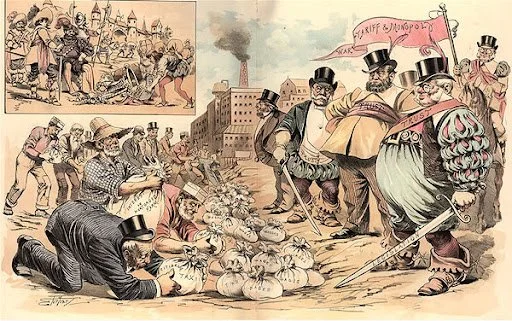
Whom Does a Leader Serve?
We are living in a second Gilded Age, and the lessons of history are once again being ignored.
America's top 1% now accounts for nearly 32% of the nation’s total wealth. The bottom 50% hold 2.5%. Income inequality has reached a 60-year peak. We have more billionaires and millionaires, and now our first trillionaire, than at any prior moment in human history. Yet the dominant ideology of corporate leadership still traces its intellectual lineage to a single newspaper essay published in 1970.

Of AI and Martinis
There’s an old saying that goes, “One martini is good. Two might be better. Three and you're face-down on the floor, wondering what hit you.”
That's AI right now. And many leaders are already on their third drink.

Are You Fungible?
In economics, fungible means interchangeable. One dollar bill is as good as another. When AI raises the baseline for what everyone can produce, a single skill becomes easier to replicate.

Having the Courage to Lead and Be Disliked
Some leaders choose popularity. They avoid difficult conversations, delay necessary restructuring, and protect underperforming executives because they're friends. Their organizations pay the price.
Overcoming Intellectual Fragility in the Workplace
While teaching in the years following the 2016 U.S. Presidential Election, I observed a troubling shift in classroom dynamics. Students who had once eagerly engaged in vibrant Socratic discussions suddenly seemed reluctant to debate or challenge ideas—both mine and their peers'. What had previously been intellectually stimulating environments transformed into cautious spaces where critical thinking appeared to take a backseat to comfort and consensus. In today's rapidly changing business environment, the ability to adapt, learn, and grow intellectually is more crucial than ever. Yet, many organizations struggle with what experts call "intellectual fragility" — a condition where employees and leaders resist new ideas, avoid intellectual challenges, and react defensively to criticism or feedback.