When Bad Behavior Becomes Business As Usual: How Leaders Build Cultures of Corruption
I was speaking with a colleague last week when the conversation turned to leadership. "Say what you want [about the President]," he said, "but he gets stuff done. That's what leaders do."
I sat there, thinking about what he'd just said. And more importantly, what he hadn't said.
Nothing about how things get done. Nothing about at what cost. Just results. Outcomes. Wins.
It prompted me to wonder: When did we, as a people, decide that the ends justify the means? When did "getting stuff done" become the only metric that matters? And more critically, what happens when good people stay silent while watching ethical and legal lines blur, then disappear entirely?
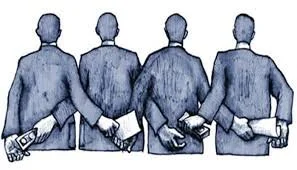
The Question No One Is Asking
Here's what I should have asked him: What about moral leadership?
I've been around a while, and I've seen what happens when leaders focus solely on results without regard for how those results are achieved. I've watched good people rationalize bad behavior. I've seen the lines blur and the impact on the organization.
We appear to be in a dangerous cycle in which rude, unethical, and sometimes illegal behavior is creeping into all aspects of life, from corporate boardrooms to government institutions to our daily interactions.
The question isn't whether you notice it. You do. We all do.
The real question is: Does it matter to you?
How Bad Behavior Becomes a Habit
Let me tell you about three companies that imploded spectacularly, and the pattern underlying their collapse.
Theranos promised revolutionary blood-testing technology from a single drop of blood. Elizabeth Holmes raised nearly $1 billion, achieved a $9 billion valuation, and graced magazine covers as the next Steve Jobs (replete with black turtleneck). The technology didn't work. Yet employees, board members, and investors who realized this had already committed to the vision, the fundraising story, the myth. Whistleblowers like Tyler Shultz were threatened, sued, and isolated. His family turned against him for speaking the truth. Everyone kept marching forward, pretending the emperor had clothes.
Enron was the seventh-largest company in America. Jeffrey Skilling fostered a culture in which hitting numbers by any means necessary was all that mattered. They used accounting loopholes and outright fraud to hide billions in debt. Thousands of employees knew something was wrong but stayed silent. Why? Because everyone around them was going along with it.
Frank was a fintech startup that promised to simplify student financial aid. Founder Charlie Javice claimed 4.25 million users when she sold to JPMorgan Chase for $175 million. The real number? Fewer than 300,000. She'd fabricated fake customer data. But before anyone blew the whistle, she'd already cashed out.
The Pattern
Research from Harvard Business School shows that unethical behavior rarely begins with a dramatic decision to do wrong. Instead, it follows a predictable pattern that researchers call "the slippery slope." Bernie Madoff himself explained it: "It starts out with you taking a little bit, maybe a few hundred, a few thousand. You get comfortable with that, and before you know it, it snowballs into something big."
Studies confirm that people who cheat a little in one situation become more willing to cheat in the next. With growing opportunities to behave unethically, 50% cheat for small gains, and 60% eventually cheat big.
Bad behavior that creeps incrementally becomes invisible. And that invisibility is exactly what corrupt leaders count on.
The Architecture
These business disasters share more than a pattern; they share an environment. A specific set of conditions that enables wrongdoing to flourish:
Intense Secrecy. At Theranos, employees worked in isolation, forbidden from discussing their work. Information was compartmentalized, and questions were met with hostility. This prevented anyone from seeing the full picture until it was too late.
Fear and Retaliation. Theranos deployed armies of lawyers to intimidate whistleblowers. Tyler Shultz spent over $400,000 defending himself against legal threats. His own grandfather, George Shultz, Theranos board member and former Secretary of State, chose Elizabeth Holmes over his grandson. The message was clear: speak up, and we'll destroy you.
Airtight NDAs and Legal Weapons. These aren't just contracts—they're instruments of control. They isolate dissenters, bankrupt critics, and send a message to everyone watching: the cost of truth-telling is ruinous.
Boards Lacking Expertise. Theranos's board included Henry Kissinger, George Shultz, and General James Mattis, impressive names with no expertise in blood-testing technology (or in any technology or science, for that matter). They provided prestige and political connections, not oversight or accountability. When boards can't understand the business they're governing, they can't protect against fraud.
Social Cost of Whistleblowing. Tyler Shultz didn't just face legal threats—he faced ostracism from his family, his professional network, and his community. The social price of integrity was isolation. Most people aren't willing to pay it.
Narrative Control. Corrupt leaders don't just commit wrongdoing; they weaponize the story. They demonize dissenters as disgruntled employees, malcontents, or incompetents. They ridicule questions as evidence of limited vision or intelligence. They isolate critics by making allegiance to the leader a test of loyalty (Is any of this starting to resonate?).
This is the blueprint. It works in business. It works in politics. It works anywhere people prioritize power over principles.
How Good People Get Tangled Up
You might be thinking: I'm not Elizabeth Holmes. I'm not Bernie Madoff. I'd never take part in that.
But here's what history teaches us: Most people who enable corruption aren't villains. They're regular people facing extraordinary pressure who make a series of small compromises that eventually add up to complicity.
Economic Desperation and the Promise of Relief. When people are struggling or concerned about their finances, they become vulnerable to leaders who promise quick solutions. "I alone can fix it" becomes intoxicating when you're drowning. You're willing to overlook how the fix is implemented if it means relief is coming.
Resentment of Past Leadership. When institutions repeatedly fail you, when leaders seem detached from your reality, when "experts" get it wrong, you become receptive to someone who promises to burn it all down. The fact that they violate norms doesn't bother you. That's the point. You want the norms violated because the norms failed you.
Fear and Intimidation. Once you're in, the cost of getting out escalates. You've invested your reputation. You've gotten your ego too close to your position. You've rationalized away your concerns. And now you watch what happens to people who speak up; they're destroyed publicly, financially, socially. Fear keeps you quiet. Fear makes you complicit.
Propaganda and Scapegoating. Corrupt systems need enemies. If problems persist, it's not the leader's fault; it's the "media," the "disgruntled former employees," the "political opponents." By creating external enemies, leaders deflect accountability and unite followers against a common threat. You stay loyal because leaving means joining the enemy.
The Lesser Evil. You tell yourself: "Yes, the behavior is bad, but the alternative is worse." This rationalization is perhaps the most dangerous because it sounds reasonable. You're not endorsing wrongdoing; you're making a pragmatic calculation. Except that calculation keeps moving the line. What starts as "lesser evil" thinking ends in the normalization of genuine evil.
The Aftermath
When it all falls apart, and it always does, watch what happens.
People claim they were "just following orders." The Nuremberg defense. They reframe themselves as victims of the leader's deception rather than enablers of the leader's corruption.
"I didn't know" becomes the refrain. The evidence shows they knew, or would have known if they'd asked, even basic questions. But intellectual curiosity is risky when you've made loyalty your currency.
The pattern is consistent: deny knowledge, claim victimhood, point to others who knew more, accept no responsibility for your own moral choices.
What I've just described isn't theoretical. It's documented, researched, and recurring in history, business, and governments around the world.
The question is whether you'll recognize the pattern before it's too late and be willing to do something about it.
You can tell yourself it's not your problem. You can assume someone else will speak up. One can rationalize that remaining silent protects one's interests.
Or you can recognize that silence is complicity.
Bad behavior starts small. It gets normalized. Good people stay silent. The environment enables it. Psychology exploits it. By the time everyone realizes how bad things have gotten, enormous damage has already been done.
So I'll ask you the question my colleague didn't want to answer.
Does it matter to you?
References:
Gino, F., Ordóñez, L.D., & Welsh, D. (2014). "How Unethical Behavior Becomes Habit." Harvard Business Review.
Mayer, D.M. (2018). "Urban Meyer, Ohio State Football, and How Leaders Ignore Unethical Behavior." Harvard Business Review.
Wedell-Wedellsborg, M. (2019). "The Psychology Behind Unethical Behavior." Harvard Business Review.