
When Character Mattered: Leadership in a Time of Crisis
On a recent stroll through the Boston Common, I came upon “The Embrace,” a memorial honoring the life and legacy of Rev. Dr. Martin Luther King, Jr., and Coretta Scott King. A man who built influence through the rarest form of leadership: moral authority. He had no position. No title conferred power. He couldn't fire anyone or sign executive orders.
What he had was character that inspired trust. Consistency in his message, even when it cost him everything. Caring that extended even to his enemies. And competence in building a movement that changed the world.
His influence endures because he earned it through who he was, not through what he controlled. Sixty years later, we're still following.
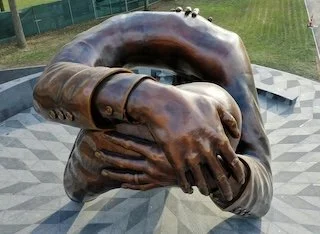
The Embrace: Boston Common
This past weekend was a grim reminder of what happens when leadership fails: shootings in Australia and at Brown University; the murder of U.S. service members in Syria; the brutal killing of the Reiners in Los Angeles. In moments like these, people look to their leaders for steadiness, hope, and someone who can ease tensions and unite rather than divide.
Instead, we got ridicule and blame: a leader mocking a grieving family; a leader blaming campus police rather than offering comfort; a leader who can't seem to grasp that in times of tragedy, you set aside petty grievances to honor the dead and support the living.
This isn't just bad judgment. It's a fundamental failure of character. And character, as it turns out, is the bedrock of authentic leadership.
The Lowest Rung on the Leadership Ladder
John Maxwell nails it in his Law of Influence: "The true measure of leadership is influence—nothing more, nothing less." But here's what most people miss: how you achieve that influence determines whether you're leading or merely occupying space.
Position is the lowest form of influence. You can force people to show up. You can demand they follow orders. You can threaten consequences. But that's not leadership—that's coercion dressed up in a corner office.
Real influence must be earned. You earn it through one thing: trust.
The Four Pillars of Trust
Charles Feltman breaks trust down into four non-negotiable pillars: Caring, Consistency, Competence, and Character. Notice anything? Three of those four have nothing to do with your technical skills or business acumen.
Caring means people believe you genuinely care about their well-being. Not as a means to an end. Not as "human capital" or "assets." As actual human beings.
Consistency means your people know what to expect from you. You don't change your personality based on who's in the room or what's politically convenient.
Character is who you are when nobody's watching. Your values. Your integrity. The inner person that drives your decisions when the spotlight's off.
Competence is table stakes—can you deliver on what you promise? Can you lead your team to victory?
Character: The Foundation Everything Else Sits On
Character ultimately determines influence. Yes, relationships matter. Competence matters. How you've handled past challenges and delivered results matters. But character is the foundation. Without it, everything else is just performance art. (Filing for bankruptcy multiple times isn't exactly a trust-building strategy.)
My father used to say, "Show me who your friends are, and I can tell you what kind of person you are." It's simple wisdom, but devastatingly accurate.
So what are we to make of someone with no long-standing, high-quality relationships? Someone who cycles through staff like disposable razors? Someone who can't set aside petty grievances even to honor people who died in the most horrific ways imaginable?
Here's the truth that is hard to hear: proof of leadership shows up in your followers. Are people following because they have to or because they want to? Are they staying or leaving? Are they inspired or just going through the motions?
When your approval ratings tank and your base begins to fracture, that's not fake news; that's feedback. When people who once stood beside you start backing away, that's not disloyalty, that's a character referendum.
The Leadership Test
In times of crisis, great leaders do three things: they steady the ship, unite the divided, and give people hope that tomorrow can be better than today.
When you ridicule the grieving, blame the vulnerable, and use tragedy as a cudgel against your enemies, you've failed every dimension of that test. You've demonstrated that your character, or lack thereof, renders you incapable of authentic leadership.
Power has its own momentum, but the question is whether anyone is actually being led toward anything worth reaching. (Nero and hero may sound similar, but their meanings couldn’t be farther apart.)
You can buy compliance. You can demand obedience. You can manipulate circumstances to stay in power.
But you cannot fake character. And you cannot force trust.
Authentic leadership, the kind that builds a legacy rather than merely occupies time, requires both. Without character, all you've got is a title and a countdown clock to irrelevance.
Want to fast-track your executive development? Let's work together to identify exactly where you are now and create a personalized roadmap for where you want to go. Because generic advice gets generic results—but targeted coaching? That's where transformation happens. Set up an appointment.